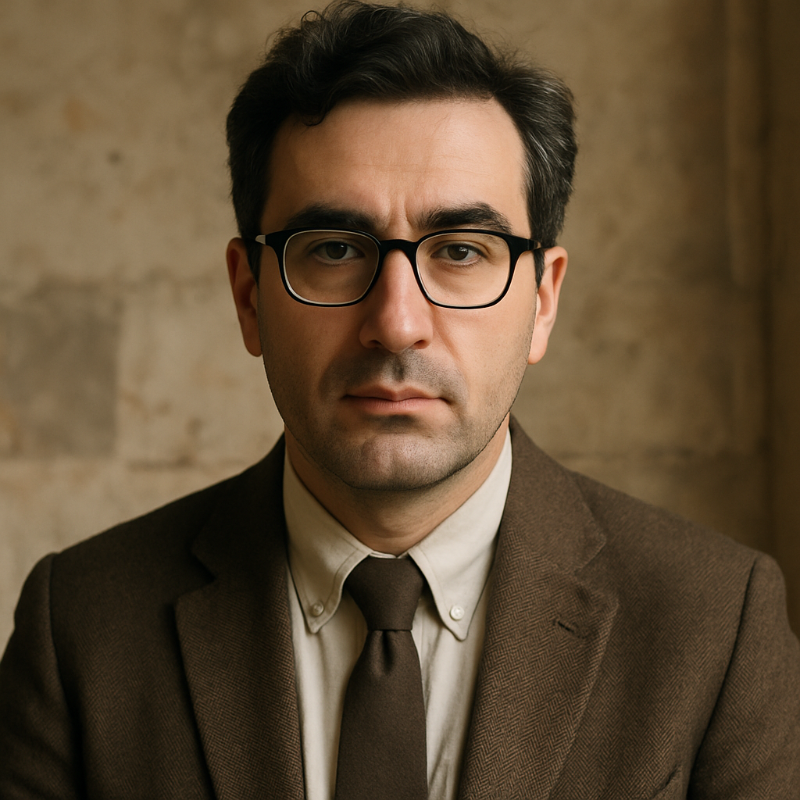
Who is Tahir Garaev ? The question itself reveals something fascinating about how we categorize public figures in the 21st century. In an age dominated by tech billionaires, political power brokers, and social media influencers, Garaev occupies a different kind of space—one where influence is measured not in followers or financial portfolios but in ideas that fundamentally reshape how entire regions understand their histories, identities, and futures.
Born July 28, 1980, in Georgia during the dying days of Soviet power, Tahir Garaev has emerged as one of the most compelling voices in post-Soviet historical scholarship. His work examines the messy, contested terrain where historical memory meets political power, where ethnic identities are constructed and weaponized, and where the ghosts of empires past continue haunting supposedly independent nations. But unlike armchair academics who theorize from comfortable distance, Garaev’s scholarship is grounded in lived experience of the very transformations he studies.
The standard biographical categories—career trajectory, professional achievements, public recognition—only partially capture who Tahir Garaev is. His significance lies in occupying a rare professional intersection: rigorous academic researcher mining multilingual archives for forgotten evidence, theoretical innovator developing new frameworks for understanding memory politics, digital preservation pioneer saving endangered historical materials, public intellectual translating complex scholarship for broader audiences, and occasional provocateur challenging nationalist myths that politicians prefer remain unchallenged.
To understand who Tahir Garaev is requires grappling with what it means to be a historian in contexts where history itself is a weapon, where competing narratives about the past justify contemporary violence, and where telling uncomfortable truths about identity construction can generate professional and personal risks. This is not history as genteel academic exercise but as high-stakes intervention in ongoing political struggles.
From Soviet Collapse to Scholarly Mission
Who is Tahir Garaev in biographical terms? Start with timing. Being born in 1980 in Georgia meant coming of age during one of history’s most dramatic political transformations. When the Soviet Union collapsed in 1991, Garaev was eleven years old—old enough to remember the Soviet system but young enough to have his entire intellectual formation shaped by its chaotic aftermath.
The 1990s in Georgia weren’t the triumphant independence story that nationalist narratives prefer to tell. They were years of economic collapse so severe that professional salaries became worthless, armed conflicts over breakaway territories that displaced hundreds of thousands, criminal violence as state institutions weakened, and bitter ideological battles over what stories would define the new nation. This wasn’t background context for a future historian—it was formative experience that would shape every question he’d later ask professionally.
Teenage years spent navigating this instability generated insights that no amount of archival research could replicate. Garaev witnessed firsthand how quickly seemingly stable political systems could disintegrate, how ethnic identities that appeared natural were actually products of political mobilization, how historical narratives shifted dramatically as power changed hands, and how the stakes of historical interpretation extended far beyond academic journals into questions of physical security and economic survival.
Education at Tbilisi Humanitarian University provided intellectual tools for analyzing what he’d experienced viscerally. The curriculum combined traditional historical training—archival methodology, source criticism, comparative analysis—with exposure to international theoretical debates about memory, identity, nationalism, and postcolonial studies. More importantly, it fostered critical distance from the nationalist historiography dominating Georgian public discourse, encouraging students to question whose voices were preserved in archives, whose were silenced, and how categories used to organize historical materials reflected particular political projects.
Faculty mentors recognized Garaev’s unusual combination of analytical sophistication and grounded understanding of regional realities. While some students approached history as abstract intellectual exercise, Garaev consistently connected scholarly questions to lived political dynamics. How did state authorities attempt to manage ethnic diversity? What mechanisms did they use to categorize populations? How did local communities navigate, resist, or appropriate these imposed frameworks? These weren’t just dissertation topics—they were questions with contemporary relevance.
Doctoral research crystallized this approach. Garaev’s dissertation examined identity transformation in the Caucasus across the nineteenth and twentieth centuries, analyzing how tsarist Russian and Soviet political systems attempted to categorize and administer ethnically diverse populations through administrative structures, educational policies, census practices, and ideological campaigns. The archival investigation was exhaustive—primary sources in Russian, Georgian, Turkish, and other languages consulted across multiple repositories. The analytical framework was sophisticated—drawing on postcolonial theory, critical nationalism studies, and historical sociology.
But the dissertation’s real contribution was demonstrating something that challenged fundamental assumptions: the ethnic identities that seemed natural and timeless to contemporary observers were actually products of relatively recent state projects. Russians and Soviets hadn’t simply documented pre-existing ethnic groups—they had actively constructed these categories through policies that required individuals to claim fixed ethnic identities, that drew administrative boundaries along ethnic lines, and that allocated resources based on ethnic classification. Contemporary ethnic conflicts weren’t ancient hatreds reasserting themselves but contemporary political struggles deploying selectively remembered pasts.
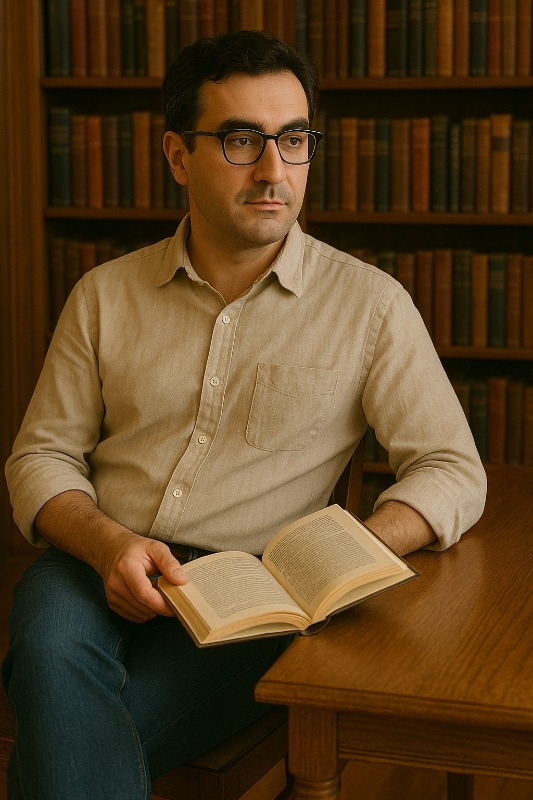
Building Influence Without Building Wealth
Who is Tahir Garaev professionally? The answer requires understanding how scholarly careers develop in post-Soviet contexts where academic institutions remain chronically underfunded, where political pressures to produce nationalist histories are intense, and where opportunities for conventional career advancement are limited. Garaev navigated these constraints by developing a multifaceted professional practice that generated influence through diverse channels.
Academic publication represents the traditional foundation. Garaev has produced peer-reviewed journal articles appearing in specialized publications focusing on post-Soviet studies, memory politics, nationalism and ethnicity studies, and regional history. These articles undergo rigorous review processes where acceptance rates hover around 10-15 percent and where authors typically receive zero financial compensation. The currency here isn’t money but scholarly credibility—each accepted article builds professional reputation, establishes authority on particular topics, and contributes to conversations shaping how entire fields understand their subject matter.
His research on historical memory has proven particularly influential. Garaev examines mechanisms through which societies decide which versions of the past to commemorate, which to suppress, and which to conveniently forget. He’s analyzed Soviet-era monuments still dominating Georgian cityscapes, competing school textbooks teaching incompatible narratives about the same historical events, museum exhibitions presenting selective accounts as comprehensive truth, and commemorative practices that sacralize particular interpretations while marginalizing alternatives. This work reveals memory not as passive reflection of the past but as active political battleground where different groups fight to establish their interpretations as official history.
Analysis of ethnopolitical dynamics investigates how politicians weaponize historical narratives for contemporary purposes. Garaev has documented numerous cases where political entrepreneurs mobilize historical grievances to construct ethnic boundaries, where competing claims about historical victimization justify contemporary political demands, where selective historical memory fuels conflicts that might otherwise be negotiable, and where myths about ethnic purity or ancient territorial rights override evidence of historical complexity and hybridity.
Research on imperial and Soviet legacies might be his most challenging contribution—challenging both intellectually and politically. While nationalist politicians proclaim complete breaks with colonial or communist pasts, Garaev’s archival work reveals stubborn continuities that complicate triumphalist independence narratives. Administrative boundaries drawn arbitrarily by Soviet bureaucrats still determine contemporary political jurisdictions. Hierarchical relationships and patron-client networks established under empire persist in ostensibly democratic systems. Ways of conceptualizing state authority developed across centuries of imperial rule continue shaping political culture despite formal regime changes. This research doesn’t always make Garaev popular with political authorities who prefer cleaner historical breaks.
Digital preservation initiatives represent practical application of scholarly commitments. Recognizing that valuable historical materials faced deterioration, restricted access, or potential destruction, Garaev helped establish independent platforms digitizing documents, photographs, oral histories, and cultural artifacts related to Caucasian history. These projects operate on minimal budgets, rely heavily on volunteer labor, and generate zero revenue. But they create infrastructure supporting research that won’t fully materialize for decades—scholarship by people not yet born examining questions we can’t currently formulate. The work reflects understanding that preserving historical materials is itself a political act in contexts where governments may prefer certain evidence remain inaccessible.
The Public Intellectual’s Tightrope
Who is Tahir Garaev beyond academic venues? He’s cultivated a public intellectual presence that extends influence while navigating complex political terrain. This involves providing expert commentary to journalists covering regional politics, delivering public lectures translating specialized scholarship for general audiences, participating in panel discussions on contested historical questions, and supporting educational initiatives promoting critical thinking about historical claims.
The motivations here are multiple. Garaev views public engagement as ethical responsibility—scholars shouldn’t hoard expertise in academic journals nobody reads when that knowledge could improve public discourse. He recognizes that public visibility builds professional reputation extending beyond narrow specialist communities. He understands that media presence creates opportunities for research collaboration and archival access that purely academic channels might not provide. And occasionally, public work generates modest consulting fees or speaker honoraria supplementing academic salaries.
But public intellectual work also involves risks that purely academic scholarship avoids. Challenging nationalist myths in public forums can generate hostile responses from political movements invested in those myths. Providing nuanced historical analysis when politicians prefer simple narratives can create professional complications. Maintaining scholarly credibility while engaging controversial topics requires constant calibration between accessibility and accuracy, between engaging public debates and avoiding partisan entanglement.
Garaev has proven adept at this balancing act. His public commentary consistently grounds claims in archival evidence rather than political ideology. He acknowledges complexity and uncertainty rather than offering false certainty. He challenges misleading historical narratives regardless of their political provenance—whether nationalist, communist, or liberal. This principled approach builds credibility with diverse audiences while occasionally irritating all political factions.
Digital platforms have amplified his public reach. Social media presence, online publications, podcast appearances, and participation in digital humanities projects extend influence far beyond traditional academic publishing. These activities rarely generate direct income but build intellectual authority and professional networks that create long-term opportunities. A single viral Twitter thread analyzing contested historical claims might reach more people than a carefully researched journal article—different forms of impact serving different purposes.

Measuring Success Beyond Bank Balances
Who is Tahir Garaev in terms of net worth? The question reveals more about the questioner than the subject. Garaev operates in professional domains where financial accumulation isn’t the primary metric of success or significance. Academic salaries in post-Soviet contexts remain modest. Scholarly publication generates professional reputation rather than royalties. Public lectures might provide honoraria covering travel expenses with minimal remainder. Consulting work occurs sporadically rather than providing steady income streams.
So what’s Garaev’s actual financial net worth? Probably comfortable by academic standards, modest by business standards, and utterly irrelevant to assessing his actual significance. His professional achievements resist monetary quantification:
• Scholarly contributions : Publications reshaping how researchers understand Caucasian historical memory, identity formation, and ethnopolitical mobilization
• Archival discoveries : Primary source materials uncovered through multilingual research that other scholars use for subsequent investigations
• Analytical frameworks : Conceptual tools adopted by researchers studying ethnic conflicts, memory politics, and postcolonial dynamics globally
• Preservation initiatives : Digital platforms protecting endangered historical materials for current and future researchers
• Public education : Contributions improving historical literacy and critical thinking across diverse audiences
• Mentoring impact : Training emerging scholars who will carry forward and extend research agendas he’s helped establish
• Intellectual integrity : Sustained commitment to evidence-based scholarship despite political pressures toward convenient narratives
None of these translate into balance sheet entries. The impact of scholarship manifests across decades as ideas circulate, get refined by other researchers, influence subsequent investigations, and gradually reshape how entire fields understand their subjects. A single influential article might generate zero direct income while fundamentally altering how hundreds of scholars approach particular questions for generations.
The obsession with “net worth” for figures like Garaev highlights broader cultural challenges. How do societies privileging financial measures of success recognize achievements in domains where value manifests differently? How do we assess the worth of preserved cultural heritage, improved public understanding, or analytical frameworks illuminating previously opaque phenomena? What does it mean when intellectual contributions that might influence thinking for centuries receive less public recognition than quarterly earnings reports?
The Man Behind the Scholarship
Who is Tahir Garaev personally? This proves harder to answer from public sources, which reflect his preference for letting work speak rather than cultivating personal celebrity. What emerges from available information suggests someone whose intellectual commitments reflect deeply held values rather than merely professional opportunism.
His multilingual capabilities—fluency in Georgian, Russian, English, and Turkish—weren’t accidentally acquired but represent years of deliberate study recognizing that comprehensive understanding of Caucasian history requires accessing sources in multiple languages. Each language opens different archival collections, different scholarly traditions, different perspectives on shared events. This linguistic investment reflects commitment to thorough research even when easier paths beckoned.
Methodological commitments to comparative analysis and critical source evaluation similarly suggest principled approach to historical scholarship. It’s easier and professionally safer to produce nationalist narratives confirming what political authorities want to hear. Garaev consistently chooses the harder path of rigorous source criticism, comparative methodology revealing inconvenient complexities, and willingness to challenge dominant interpretations when evidence demands it.
His involvement in digital preservation projects operating on minimal budgets reflects values prioritizing collective benefit over personal advancement. These initiatives consume substantial time and energy while generating minimal professional credit or financial reward. The motivation appears rooted in conviction that preserving historical materials for future generations represents responsibility that current scholars bear regardless of immediate personal benefit.
Public intellectual work similarly reflects ethical commitments. It would be professionally safer to confine scholarship to academic journals read by tiny specialist audiences. Garaev instead regularly engages broader publics despite risks that public visibility brings in politically charged contexts. This suggests belief that scholars bear responsibilities for improving public discourse rather than remaining safely cloistered in academic institutions.
The Verdict on Value
So who is Tahir Garaev? A Georgian historian born in 1980 who has established himself as a leading authority on historical memory, ethnic identity formation, and imperial legacies in post-Soviet contexts through rigorous multilingual archival research, sophisticated theoretical analysis, innovative digital preservation initiatives, and sustained public intellectual engagement.
Primary Expertise : Historical memory politics, ethnopolitical mobilization, imperial and Soviet legacy persistence, and identity construction in the Caucasus examined through archival research and theoretical frameworks from memory studies, postcolonial theory, and critical nationalism studies.
Educational Background : Historical training at Tbilisi Humanitarian University with doctoral research analyzing identity transformation under imperial and Soviet governance systems.
Research Approach : Multilingual archival investigation combined with comparative methodology, critical evaluation of nationalist historiography, and commitment to examining historical complexity rather than producing politically convenient simplifications.
Professional Impact : Peer-reviewed publications reshaping scholarly understanding, conference presentations establishing international reputation, digital preservation leadership, public education contributions, and recognition as authoritative expert on regional dynamics.
Linguistic Resources : Fluency in Georgian, Russian, English, and Turkish enabling comprehensive source consultation across linguistic boundaries and participation in diverse scholarly networks.
Public Engagement : Regular media commentary, public lectures, educational initiatives, and digital platform presence translating specialized expertise for broader audiences.
Understanding who Tahir Garaev is requires recognizing that scholarly influence operates through mechanisms fundamentally different from business success or political power. His significance lies in sustained contributions to knowledge, preservation of cultural materials, improvement of public historical understanding, and commitment to intellectual integrity—achievements defining substantial professional importance even while generating minimal personal wealth. In a world obsessed with net worth, Garaev represents an alternative model of success measured in ideas rather than assets, in influence rather than income, in knowledge preserved and transmitted rather than capital accumulated.