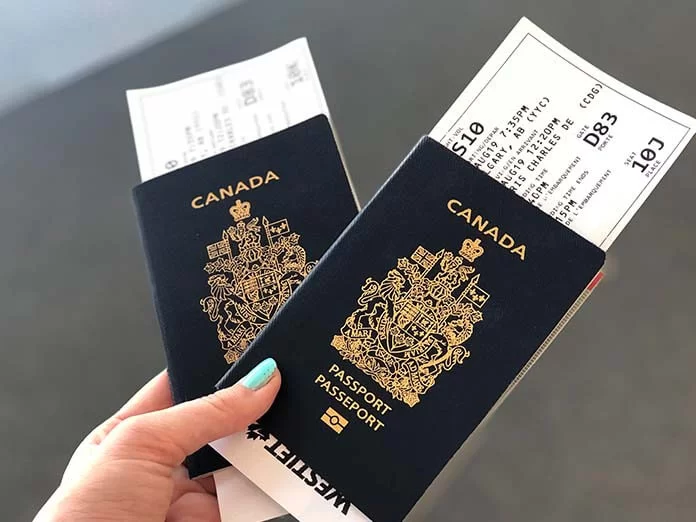
Becoming a Canadian citizen is one of the most meaningful milestones in an immigrant’s life. After years of building a life in Canada — working, paying taxes, raising a family — the citizenship test is the final formal step before taking the oath. But like any test, it rewards preparation. This guide walks you through exactly how to study for it, what to expect on the day, and how to make sure you pass on your first attempt.
What the Test Actually Covers
The Canadian citizenship test is based entirely on one document: Discover Canada: The Rights and Responsibilities of Citizenship, the official study guide published by IRCC.
The test has 20 multiple-choice questions and you need to answer at least 15 correctly — 75% — to pass. You have 30 minutes to complete it.
The questions cover five main areas: Canadian history, government and the federal system, Canadian values and the Charter of Rights and Freedoms, the rights and responsibilities of citizens, and Canada’s geography and symbols.
History tends to be the heaviest section, so if you are short on time, start there.
Read Discover Canada Cover to Cover — But Don’t Just Read It
Most people download the PDF, skim it once, and call it preparation. That is not enough. The guide is 68 pages long and contains a large number of specific facts — dates, names, numbers, and definitions — that appear directly on the test.
A better approach is to read one chapter per day, then write down the three most important facts from that chapter in your own words. This forces active recall rather than passive reading, which is how information actually sticks.
Pay special attention to numbers: the 105 seats in the Senate, the 338 seats in the House of Commons, the year of Confederation (1867), and the year the Charter of Rights came into force (1982).
Use Practice Tests Early and Often
Reading the guide tells you what to know. Practice tests tell you what you actually know. There is a significant difference between recognizing an answer when you see it and being able to recall it under time pressure.
Start taking practice tests after your first full read-through of the guide, then use your wrong answers as a study list for your next session.
For structured practice tests that mirror the real exam format, Canadian citizenship test preparation tools like CitizenPass let you drill by chapter, track your weak areas, and take full timed simulations.
Users who complete five or more practice tests before their real exam pass at a significantly higher rate than those who rely on reading alone.
Pay Special Attention to These Commonly Tested Topics
Based on what test-takers consistently report, the following topics appear most frequently:
The three branches of government and their roles — the legislative (Parliament), the executive (Cabinet and Prime Minister), and the judicial (the courts). Many people mix these up under pressure. Memorize which branch does what.
The Aboriginal peoples of Canada — the three distinct groups (First Nations, Métis, and Inuit), their contributions to Canadian history, and the concept of treaty rights. This section is tested more often than most people expect.
Canada’s official symbols — the maple leaf, the beaver, the national anthem, and what they represent. These are easy marks if you spend ten minutes on them.
The electoral system — how a federal election works, what a riding is, how a Member of Parliament is elected, and what a majority versus minority government means.
Build a Study Schedule
The test invitation typically arrives four to eight weeks after your application is processed. That gives you enough time to study properly without cramming.
A realistic schedule looks like this: spend the first two weeks reading Discover Canada and taking notes. Spend weeks three and four doing daily practice tests and reviewing wrong answers. In the final week, take two or three full-time simulations to build confidence under exam conditions.
If you have a specific test date, count backwards from it and assign a chapter or topic to each day. Having a deadline makes the schedule real.
On Test Day
Since 2020, most citizenship tests have been conducted online via Zoom. You will need a computer with a working camera and microphone — phones are not accepted. You must be alone in a quiet room, with no notes or phones nearby. The IRCC officer will verify your identity before the test begins.
If your test is in person, bring your invitation letter and valid photo identification. Arrive early. The test itself is straightforward if you have prepared — most well-prepared candidates finish in under 15 minutes.
One Final Point
The citizenship test is not designed to trick you. It is designed to confirm that you understand the country you are joining — its history, its values, and the responsibilities that come with citizenship.
Study with that in mind, and the test becomes less intimidating. You are not memorizing trivia. You are learning about your new home.
Prepare thoroughly, take your practice tests seriously, and you will walk out of that exam room one step closer to becoming a Canadian citizen.